
Pedigree Complete Nutrition Grilled Steak & Vegetable Flavor Dog Kibble Adult Dry Dog Food, 40-lb bag
Dogs bring out the good in us, and Pedigree dog food brings out the good in them. Show you...








Dogs bring out the good in us, and Pedigree dog food brings out the good in them. Show you...
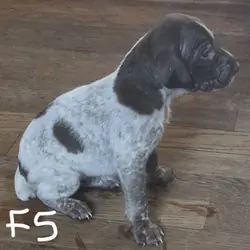














If you are an avid outdoors person or jogger, a German Shorthaired Pointer or GSP could be the ideal dog to accompany you. Constantly on the move, the GSP excels in many canine-human paired activities based on sheer athleticism. Moreover, German Shorthairs continue to be one of the most versatile hunting dogs. German Shorthaired Pointer puppies for sale grow into medium-sized, muscular, tightly wound dogs with a base color of liver, black, blue, or white.
You can easily distinguish pointers from both retrievers and spaniels among the bird dogs. They also differ from other hunting dogs like hounds in conformation and coat color. Moreover, the German Shorthaired Pointer has a few distinctions, especially in the head, from the Pointer.
A Shorthaired German Pointer for sale will have a specific standard to which it adheres to varying degrees. The dogs that best fit the breed standard are potential champions in the show ring while those that deviate can still be great pets and even perform well in the field depending on the defect.
German Shorthaired Pointers have a short hard coat that feels dense because of the softer undercoat. The fur is adapted to cold and damp conditions and has insulating properties for warm weather as well. GSPs cannot cope with water as cold as can the Labrador Retriever.
The German Shorthaired Pointer for sale usually adheres to the strict color restrictions set forth by the AKC. You should always see a variation of the liver pattern.
Liver, known as chocolate in some breeds, occurs because a gene in a dog's coat color blocks the expression of any black pigment. The German Shorthaired Pointer is unusual because it usually has brown eyes instead of the amber ones more prevalent with the brown coat gene. Without two copies of the brown gene, you will get a black German Shorthaired Pointer. Such dogs will be black where they should be liver. As beautiful as they are, the AKC will disqualify a black German Shorthaired Pointer. If the black pigment or eumelanin is not blocked but merely suppressed, you will see a blue German Shorthaired Pointer. Blue is rare in the breed and will also result in disqualification from an AKC conformation show. Unacceptable colors for the GSP that you may see in other hunting dogs are tan, red, lemon, or solid white. Note that a disqualification for coat color only means the dog cannot be placed in a show. You can register a black German Shorthaired Pointer as a purebred with the AKC. Moreover, a black or a blue German Shorthaired Pointer is fully acceptable with the FCI and major German registry.
German Shorthaired Pointers, like other gundogs, are steady and unflappable in character. They are not sensitive to loud noises, nor are they bothered with nerves. You will also notice the breed's intelligence, eagerness to please, work drive, and high energy. At home, the GSP is loyal, affectionate, and playful. He tends to be friendly with strangers, although some are mildly reserved and protective. German Shorthaired Pointers can be aggressive with unfamiliar dogs, especially when not properly socialized, but most love any potential playmates, human or canine. German Shorthaired Pointers are usually too high-energy for small children. Children that are best equipped to handle the GSP's rambunctious play are at least seven to ten years old. GSPs have an exceedingly high prey drive and will tend to chase down any small animal including cats. They also should not be trusted around tiny dogs.
One of the many things you might notice in the German Shorthaired Pointer is that it is much more versatile than the Pointer. Originating approximately at the beginning of the 1600s, the GSP was first a cross between Gascogne and Pyrenean type French pointers (Braque Francais) and the old German Bird Dog, also a pointer. Germany further developed the breed by adding German Bloodhound and French Gascon (large French scent hound) for tracking and to create better pet temperaments. In the 1860s, the Germans added English Pointer to reestablish pointer qualities such as pointing instincts, a stylish sleek appearance, speed, and agility. German Shorthaired Pointers can point, retrieve on land and in water, and hunt game besides birds. The German Kennel Stud Book first recognized the German Shorthaired Pointer in 1872, and the AKC accepted the breed into the sporting group in 1930. As of 2020, the GSP ranks ninth of over 200 dog breeds in popularity in the US. Although frequently used as bird dogs in America, German Shorthaired Pointers also hunt raccoons and deer.
Like most dogs, German Shorthaired Pointers are low-maintenance in some areas and require a lot of attention in others.
German Shorthaired Pointers are willing to please and intelligent, but they also have an independent streak. Reasonably easy to train, they still need plenty of repetition and patience, especially as adolescents. At the same time, you must be at least a little creative to avoid boring your dog. Basic obedience should begin as soon as you acquire your puppy, and socialization should continue from what the breeder has already done. Your dog’s predatory instincts also raise some challenges to training. German Shorthaired Pointers can appear easily distractible and unmanageable when squirrels, chipmunks, or the neighbor’s cat dart within her line of sight.
German Shorthaired Pointers require an hour or more of exercise daily, preferably with at least two or three weekly outings of two hours. GSPs are extremely active, and the more exercise you can give them the less prone they will be to hyperactivity in the home, excessive barking, and chewing. A job to do is ideal, and you can accomplish this with various competitive or sporting activities. German Shorthaired pointers are one of the most well-rounded athletes you will run across in the canine world.
Finding a healthy GSP near you that is not a product of a puppy mill or unethical breeding requires substantial research. Casual but conscientious breeders may not be able to provide you with registration papers but can often produce healthy pups at affordable prices. You may not ever find out the background or get access to any health certificates with these backyard puppies. Other possible sources of purebred GSP dogs are shelters and rescue organizations. Again, you will not often get an AKC-registered dog or know its history, but the puppies usually get their first set of vaccinations and are dewormed and neutered. However, purebred puppies through humane societies are rare. On the plus side, adults many times receive health and behavioral screenings.
Sponsored picks
Affiliate disclosure: purchases made through these links may earn PetClassifieds a commission.

Grain-Free • Novel Protein • Gut-First Nutrition Give your dog a meal built for wellness w...

Grain-Free • High-Protein • Advanced Digestive Support Brothers Turkey Meal & Egg recipe i...
Dogs bring out the good in us, and Pedigree dog food brings out the good in them. Show you...


