

Venison & Egg Dog Food
Grain-Free • Novel Protein • Gut-First Nutrition Give your dog a meal built for wellness w...
Grain-Free • Novel Protein • Gut-First Nutrition Give your dog a meal built for wellness w...
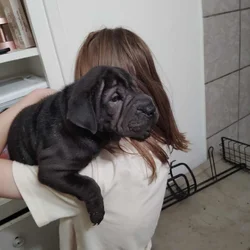
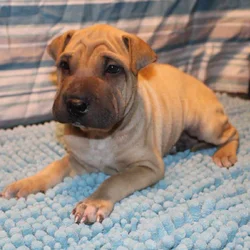
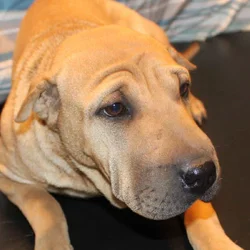
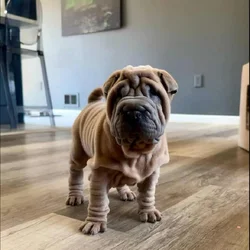
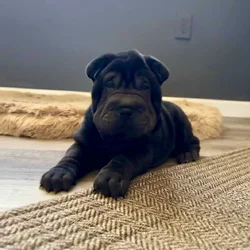


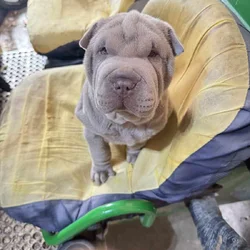
Climbing from the brink of disappearance at a time when cabbage patch dolls were the rage, Shar-Peis also skyrocketed to popularity. Looking similar in the face to the endearingly ugly dolls, Shar-Peis were the wrinkled dogs that everyone had to own. Still in the top 50 most popular dogs in the US as of 2020, the Shar Pei is unusual not only in appearance but also in temperament and background. If you want a medium-sized dog with a formidable but pleasant demeanor and only modest needs, you might consider a Shar Pei for sale. However, you must be particularly vigilant in finding the right dog because of the host of potentially expensive health issues.
You will often see the term Chinese Shar pei. Indeed, it is likely the Shar-pei originated in southern China around 200 BC. A rarity of Chinese breeds, the Shar-pei was a dog of the peasants, working on farms mostly as guards. Shar-peis also served as livestock guardians against predators and as wild boar hunters. Eventually, these dogs found themselves in the fighting rings. Dogfighting became an important revenue source via gambling and a highly contended blood sport. Participants coveted the Shar-Pei breed for its stamina, bravery, and strength, but still plied them with various drugs to enhance performance. Shar-peis would soon be replaced and almost driven to extinction by the Mastiffs, Pit Bulls, and Bandogs from the west. Owners of the dogs that survived were subject to burdensome taxes in the 1960s from the Communist government, decimating Shar-Pei numbers even further.
Taking in the Shar-Pei as their national dog, Hong Kong appealed to the US around 1973, and together the countries resurrected the Shar Pei from 12 remaining dogs. Shar-Pei puppies for sale with their endearing wrinkles won the American public over. Shar-peis went from the record rarest dog breed in 1978, at about 60 individuals, to become a part of the wrinkled puppy craze of the 1980s. However, frantic efforts to save the breed from imminent extinction introduced crossbreeding from Bulldogs, Chows, Pugs, and others that vastly transformed the appearance of the Shar Pei.
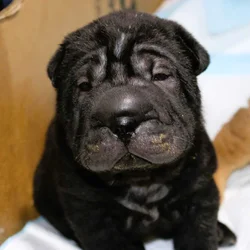
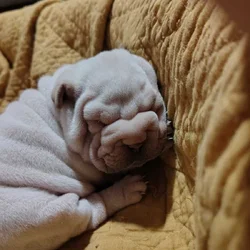
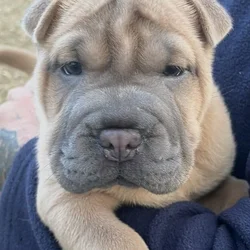
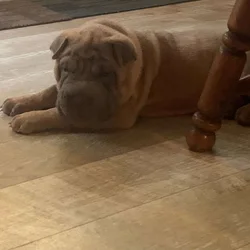
Shar-Peis have relatively large heads, and as adults, this is where most of their wrinkles are. The AKC recognizes a muzzle that should be broad and fairly short with loose skin. However, Hong Kong attempts to maintain a somewhat longer and narrower "bone-type" muzzle with no folds. Shar Peis with narrower and drier snouts represent lines that were likely not influenced by crossbreeding during the 1970s. Describing the head of the more popular type further, the muzzle should be equal in length to the skull which is flat on top. The eyes are dark, almond-shaped, and sunken and the ears exceedingly small, triangular, and tightly folded into a forward-facing button. A Shar Pei has a medium, powerful neck and a short back similar to a Bulldog's in that it dips just past the shoulder and then rises gradually towards the hips. However, there is no exaggerated slope in the croup. The tail should be set high, and the dog carries it in a loose to tight curl over the pelvis. It will drape over one side or the other. Loose folds exist around the shoulders, but some dogs are quite wrinkly throughout the entire body.
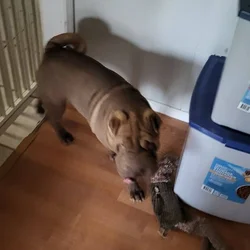
Shar-Peis are medium-sized, compact dogs. They stand 18 to 20 inches tall at the withers and weigh 35 to 55 pounds. Males and females are often the same sizes. A male may appear more muscular and, thus, bigger than a female.
Besides its head, the Shar Pei's defining feature is its coat which should be harsh and bristly like a wild boar's. It can range from less than half an inch to a full inch in length and stands up off the skin from the withers to the lower trunk of the body. A Shar-Pei's fur lies flatter on the limbs, and there is no undercoat. Extremely short-haired dogs are "horse coats" while the longer-haired dogs are "brush coats." A Shar-Pei's guard hairs must be an inch or less at their longest point, which is from the lower neck and over the shoulders. Shar Pei bear coat puppies and adults, as well as trimmed dogs, are heavily faulted in the show ring.
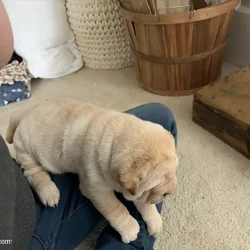
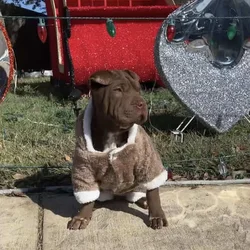
Once described as a sandy dog with an extremely harsh coat, no preference is shown for any color deemed appropriate by the AKC. Shar-peis must be solid colors except for sable, and they often display various shade gradients throughout their fur.
True for many breeds, blue in the Shar Pei is the work of a dilution gene on the dog's black pigment.
Sables are the only Shar pei type that permits anything other than a solid color. They indicate dogs with a named base color with black-tipped hairs. Depending on the distribution of black banding, dogs may appear black and tan, black and red, fawn and black, or cream and black.
A Shar Pei is loving and affectionate with its family members and wary of strangers. She should be protective without being aggressive, but poor socialization can result in an openly hostile dog. Shar-Peis make effective guard dogs that should have a discriminating nature. Proper socialization at a young age will also ensure that your Shar-Pei will play well with other dogs as an adult. Otherwise, it bears remembering the breed's fighting heritage. Shar-Peis get along best with older children. These dogs are not overly active but can grow impatient with poor manners from small kids and toddlers. Other personality traits are devotion and moderate playfulness.
Shar Pei bear coat puppies seem an oxymoron to the breed’s name. Shar-Pei means rough, sandpaper-like hair. Bear coats have long soft fur. Also going by the name Teddy bear Shar-pei, a bear coat is the result of a recessive gene. This gene reveals a throwback to the ancestor the Shar-pei has in common with Chow Chows. Its reappearance in modern lines may be the effects of some back breeding of the Shar Pei to the Chow to save the dog in the 1970s. The long-haired variety of the breed is not recognized by major registries.
Although they have a separate club, the Miniature Sharpei Club of America, Mini Shar-Peis share the same characters other than size as their larger cousins. Breeders capitalize on a recessive gene to select for small Shar Pei sizes in their litters. As an adult, a mini Shar-Pei should be no taller than 16 or 17 inches at the shoulders and weigh 40 pounds or less. True Toy Shar Pei puppies are rare. Adults are about 13 inches tall and weigh less than 25 pounds but are often fraught with illnesses such as poor cardiac and organ development. Fanciers sometimes refer to Miniature Shar Peis as Toys and Teacups, although their size does not usually fit within the traditional parameters. Like the standards, Miniature Shar Pei puppies for sale can be cream, black, blue, apricot dilute, fawn, red, brown, or sable. They typically have more wrinkles than larger dogs.
Shar-peis have a short lifespan for their size, only living nine to eleven years. There is high interest among those concerned about the breed's welfare to keep records of Shar-Pei living longer than the age of 10. When you search for Shar Pei puppies for sale, you should buy from individuals who screen their breeding dogs. Shar-Pei certifications should include evaluations of the knees, hips, elbows, eyes, and thyroid gland. You cannot always obtain full health records, history, lineage, or certificates for rescue or shelter animals.
Sponsored picks
Affiliate disclosure: purchases made through these links may earn PetClassifieds a commission.
Grain-Free • Novel Protein • Gut-First Nutrition Give your dog a meal built for wellness w...

Grain-Free • High-Protein • Advanced Digestive Support Brothers Turkey Meal & Egg recipe i...
Dogs bring out the good in us, and Pedigree dog food brings out the good in them. Show you...


