

Turkey & Egg Dog Food
Grain-Free • High-Protein • Advanced Digestive Support Brothers Turkey Meal & Egg recipe i...


Grain-Free • High-Protein • Advanced Digestive Support Brothers Turkey Meal & Egg recipe i...
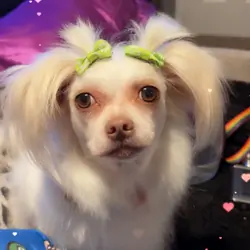
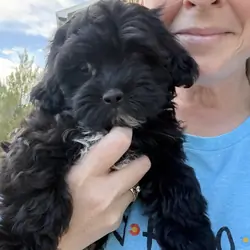


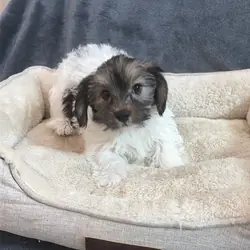


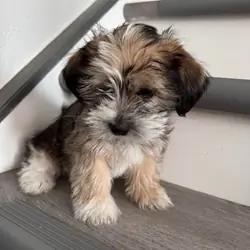
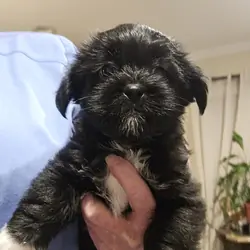


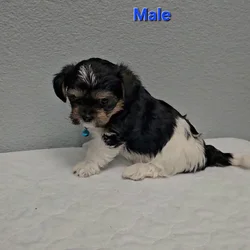
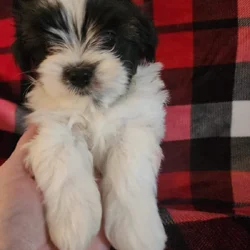
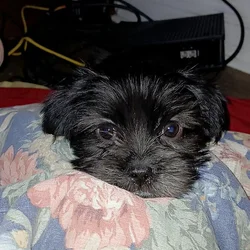
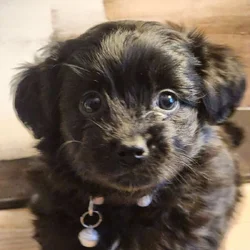


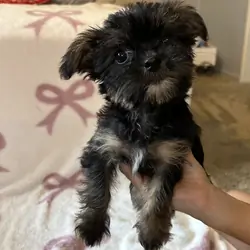
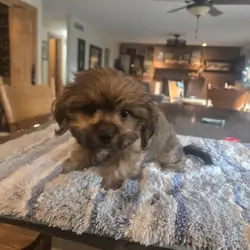
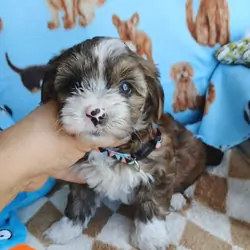
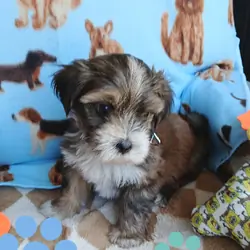
The Shorkie is a relatively new small designer dog that makes an endearing and snuggly pet. It is attractive whether you leave its locks of flowing hair long or clip your dog to resemble a Teddy bear. Shorkies make great watchdogs and fit well into families with older children and small or medium dogs. They also make perfect companions for older singles or couples.

Rising in prevalence only since 2011 or so, the Shorkie underlines the fact that designer breeds are not a fad. A Shorkie dog is a cross between a Shih Tzu and Yorkshire Terrier. It was first purposely bred in the US to create a small and sweet companion dog with some feistiness. Yorkshire Terriers originated among the Scottish in the UK in the 1800s to control rodent populations in the city and on farms. Eventually, Yorkies achieved more demand as house pets than chasing mice. Shih Tzus were originally bred in Tibet in 1000 BC as holy dogs and companions. In 15th-century China, they evolved further and became companions and watchdogs for royalty. The AKC accepted the Shih Tzu in 1969 while the Yorkshire Terrier joined the registry in 1885.
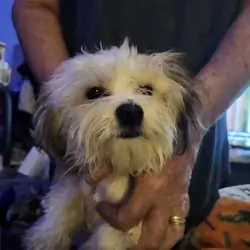
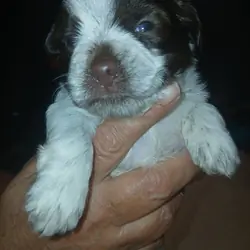
Since Shorkies are still new as of 2021, their appearance reflects the variability of hybrid dogs. While a few puppies of the cross will look almost completely like one parent or the other, the majority inherit genes from the Shi Tzu and Yorkie with fairly equal distribution. Such dogs will blend the temperamental and physical attributes of the parent breeds.
Your Shorkie will either have a single layer of hair or a double coat. In either case, the hair is silky, continuously growing, flowing, and considered hypoallergenic. It is low-shedding and reaches the floor if properly maintained. If your dog has an undercoat, her hair is still likely to be less dense than a purebred Shi Tzu. Shorkies can boast the colors of a Shih Tzu or a Yorkshire Terrier.
A solid-colored dog such as gray, silver, blue, brown, golden, or black Shorkie may have little patches of white on the chest or toes.
Your Shorkie should be a loving dog that likes to be held but also enjoys playing. Shorkies have all of the fierce bravado and tenacity of a Yorkshire terrier as well as the friendly docility of a Shih Tzu. Other traits you can see in Shorkie puppies for sale are high activity, alertness, and curiosity. Adults also are energetic as well as loyal. As with any dog, especially a small one, socialization is the key to preventing shyness or aggression.
If you can visit a future puppy that is nearby, you should have specific things in mind to help you pick out the best one for your family. Puppies that are neither too submissive nor excessively pushy make the best pets for large families. Dominant puppies are better for individuals or couples who are willing to dedicate a lot of time towards training and do not mind their dog challenging them frequently. Other qualities to look for are a clean and safe environment and a healthy pup. Healthy puppies look well-fed and happy and are free from any evidence of diarrhea or nasal or ocular discharge. All animals that you see should be clean and should not show signs of aggression or fearfulness. Puppies should be eight to twelve weeks before the breeder is willing to release them to new homes. Pups that have extra time to socialize with their littermates and adult dogs that live in the home will be more likely to be well-adjusted in your household.
If you keep your Shorkie's coat intact, you will need to brush it daily to prevent tangles from developing. Many owners keep their dogs in a short "Teddy bear cut" so maintenance is much more effortless. The style varies but usually leaves the hair on the head and clips the body close. Some variations leave a little length on the legs and tail. If your Shorkie has an undercoat, you need to leave it a little longer than a single-coated dog so as not to permanently damage the hair. Using improper clipping techniques on a double-coated Shorkie can lead to bald patches. Shorkies also need regular nail trims, teeth brushing, and baths with a mild shampoo. Use caution when shampooing long-haired dogs because you can create an impossibly snarled mass of mats.
Toy breeds require more calories per pound of bodyweight than large-breed dogs. Your Shorkie needs 140 to 350 calories or a third to three-quarters of a cup of food every day. It is more accurate to weigh fresh or raw food if you decide to feed a more holistic diet. Consult with your veterinarian or a nutritionist to get the balance of nutrients correct. Plan on feeding 2% to 3% of your dogs' total body weight in pounds (4% to 6% of total body weight for puppies). Small dogs, especially those under 10 pounds, may have difficulty maintaining their blood sugar at a healthy level. It is generally better to feed Shorkies three or more meals daily.
A Shorkie should engage in 30 minutes of exercise a day broken into two or three sessions. You should involve your Shorkie in games that ramp up her circulation such as fetch or agility. Mix vigorous play with walks and training. Shorkies can be moderately athletic and can participate in activities such as agility and lure coursing. They do not have a great deal of stamina and can be sensitive to the heat if they have shortened faces.
Although it is tempting to skip basic obedience training in such a tiny dog, guidelines are important for Toy breeds. Without boundaries, they can become domineering, aggressive, and manipulative. Training Shorkies is a bit of a challenge because they possess the independence and stubbornness of their parents. Patience, repetition, and a motivational reward system are musts for effectively training your Shorkie.
Shorkies are natural companion dogs that love every member of their families. Their favorite activity is cuddling on a lap. However, they tend to bond closest with their favorite person who is generally their major caretaker. From their Yorkie side, they inherit a protective instinct and usually make excellent watchdogs. At the same time, once they ensure there is no threat, they warm up quickly to guests. Shorkies get along with children over the age of 10 to 12 years old or those who know how to be careful and gentle around such a small pet. These dogs do not tend to warm up as readily to strange kids as they do to adults.
Early socialization will increase your Shorkie's chances of getting along with other pets. They do well with other small dogs and cats. Shorkies can also do well with medium-sized dogs but use caution around large dogs. Your Shorkie is very vulnerable to severe injuries. Your Shorkies is not likely to be a good fit with rodents or similar pets because of its background as a rather.
The Shorkie is already an extremely small dog, but many dog owners associate tinier with cuter. A Shorkie can qualify as a Teacup if it is under seven pounds, but some breeders aim for dogs that will mature between two and four pounds. The ethics of the tactics to get such a small Shorkie are questionable, emphasizing the importance of you researching the source of any puppy you want to purchase. Teacup Shorkies are more susceptible than usual to a host of ailments.
Sponsored picks
Affiliate disclosure: purchases made through these links may earn PetClassifieds a commission.

Grain-Free • Novel Protein • Gut-First Nutrition Give your dog a meal built for wellness w...
Grain-Free • High-Protein • Advanced Digestive Support Brothers Turkey Meal & Egg recipe i...
Dogs bring out the good in us, and Pedigree dog food brings out the good in them. Show you...


