

Turkey & Egg Dog Food
Grain-Free • High-Protein • Advanced Digestive Support Brothers Turkey Meal & Egg recipe i...
Grain-Free • High-Protein • Advanced Digestive Support Brothers Turkey Meal & Egg recipe i...
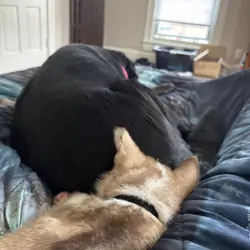
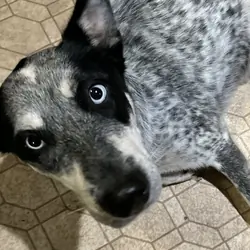
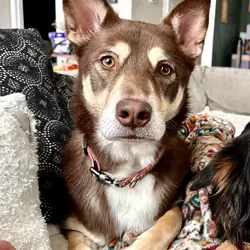
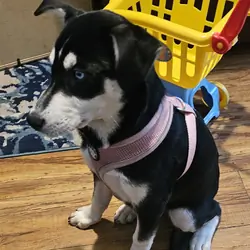
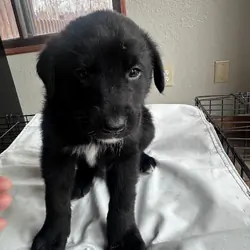

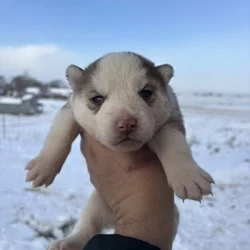
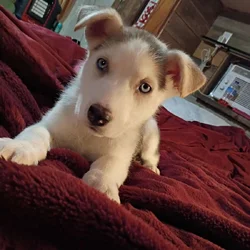
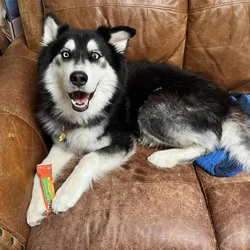
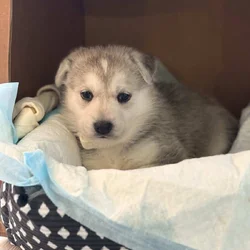
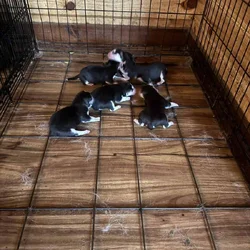
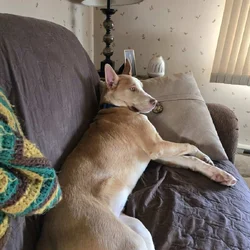
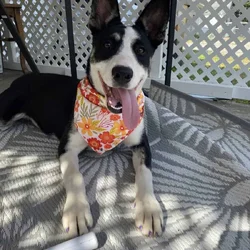


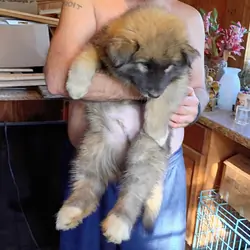
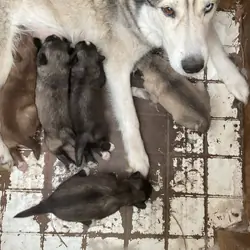
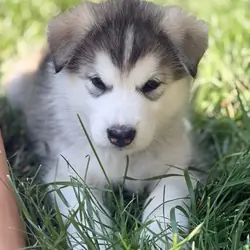
It was once unusual to see an Alaskan husky outside of a snow-covered racing venue. With the trend toward acquiring dogs of mixed ancestry and wild-looking or exotic pets, more owners appreciate the virtues of Alaskan husky puppies for sale. Due diligence is important in acquiring this type of dog because of its strong will, high energy levels, and power.
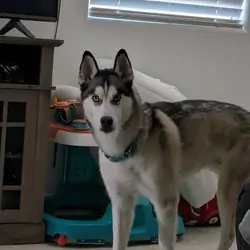
An Alaskan husky can be a medium or large dog. Well-equipped for working in frigid temperatures, Alaskan huskies are double-coated, well-muscled, and powerful. They do not make suitable house pets for the average dog owner.
Alaskan huskies originated with the goal to cross the phenomenal sled-racing abilities of the Siberian Husky with the strength and stamina of aboriginal Arctic village dogs. While the landrace dogs were instrumental in the origin of the Alaskan Malamute, backcrossing with the latter was crucial to many Alaskan husky lineages. As sledding became more of a sport and a race than a necessity for survival, creators of the Alaskan Husky infused Alaskan Malamute and Siberian Husky blood into their original working dog lines to generate more speed. A few founders also used other Spitz family members such as the Samoyed and Greenland Dog. However, the modern Alaskan husky largely owes its heritage to the Siberian and Malamute. Later, breeders utilized experimental crosses to improve the speed of their dogs even further. Several breeds involved in the creation of today's Alaskan husky for sale include the Greyhound, German Shorthaired Pointer, English Setter, Labrador Retriever, German Shepherd, Saluki, and Pointer. The Alaskan husky is not recognized by any major registries and outcrossing still occurs.
An Alaskan husky's mixed ancestry is evident in its variable appearance. However, different lines tend to breed true. There are racing lines that are smaller and faster than average. Racing lines can be further divided into the heavier distance runners (Great Pyrenees, Siberian Husky, Alaskan malamute, and some terrier blood), the ultra-light sprinters (Saluki bloodlines), and standard racers (strong Siberian Husky and Alaskan malamute contributions). Draft lines that pull heavier loads are larger and bulkier and do not have as much Siberian Husky and Alaskan Malamute influences.
Regardless of its lineage, an Alaskan husky is heavier with more muscle mass than a Siberian Husky. However, it is lighter and smaller than an Alaskan Malamute.
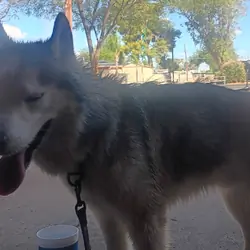
An Alaskan husky has a short or medium-length double coat. Its dense fleecy undercoat is designed to withstand subzero temperatures. Like other members of the Spitz family, an Alaskan husky's fur is resistant to moisture from snow and ice. The breed "blows" its coat in the spring, shedding copious amounts of underfur. An Alaskan husky's fur is adapted to both hot and cold seasons, meaning you should never shave your dog.
Since an Alaskan husky is not a specific breed but rather a type, it can be any color or pattern. The exceptions are merle, roan, ticked, and generalized spots. What follows is a list of several more common colors:
Many Alaskan huskies have striking facial patterns including a cap on the head. For example, you will frequently see asymmetrical blazes, expanded brown points (i.e., large brown spots over the eyes and across the chest), extended white stockings, and dramatic spectacles.
Alaskan huskies are bold, intense, and friendly. They have a long history of cooperating with people and large packs of dogs, so they tend to get along famously with both. Although they are quite vocal, Alaskan huskies do not make effective guard dogs because of their social tendencies. Your dog is likely to be somewhat claustrophobic and may want to spend most of its time outside. However, it is not a breed that thrives on being alone much. Alaskan huskies left too much to their own devices will become destructive through digging, trying to escape the home, and howling excessively. Alaskan huskies tend to be more suited to older children than small kids because of their high energy levels and larger size.
An Alaskan husky's lifespan correlates with its size. Large dogs live an average of 10 to 12 years while smaller individuals more frequently live 12 to 15 years. Like other huskies, Alaskans are hardy.
An Alaskan vs Siberian Husky poses more differences than similarities.
| Alaskan Husky | Siberian Husky | |
|---|---|---|
| Country | Russia and Greenland to Alaska - began with paleo-Eskimos, development continued with Inuit people | Russia - Siberia with Chukchi tribes |
| History | Ancient line - from aboriginal dogs; line is as old as 10,000 years | Ancient breed - from Chukchi dogs 4,000 years ago or more |
| Appearance | Variable - ears can be upright, semi-prick, or floppy; tail straight or curled; head wedge-shaped, more wolflike, or with more pronounced cheeks and jowls; eyes usually brown | Standard appearance - ears always upright; tail curls over the back; head wedge-shaped; blue eye color is a dominant although not universal trait |
| Coat | More uniform in length; one yearly big shed | Shaggier with more variable lengths; two yearly sheds |
| Personality | Working dog - more intense with more stamina and higher energy levels | Better adapted to indoor living |
| Size | Larger, leggier, leaner, and visibly stronger - 18 to 24 inches tall, 35 to 75 pounds | Smaller, less muscular development - 20 to 24 inches tall, 30 to 60 pounds |
| Colors | More variable and a greater tendency for less definition and more irregular markings; spectacles tend to be more marked; a higher tendency for wild agouti coloring; GSD sable patterns are common | More often have a base color of white with patches of color; clear white flashy markings more common; large range of colors but patterns more restrictive than in Alaskan |
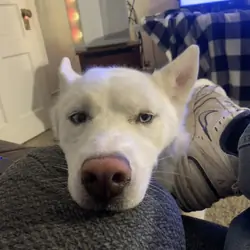
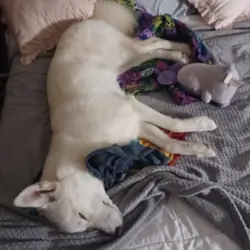
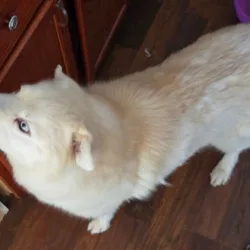
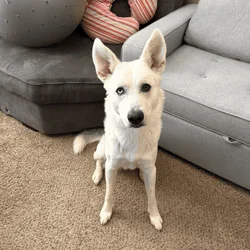
A white Alaskan husky looks a lot like a white Siberian Husky. However, something about the shape of the head and muzzle will tell you that the Alaskan husky is not a purebred dog. How the Alaskan's ears are set will be different than a Siberian's. Also, the tail is likely to be a lot different between the two dogs. Finally, if the dog has ice-blue eyes, it is much more likely that it is a Siberian Husky.
If you are set on owning an Alaskan husky, the following tips are crucial to the happiness of you and your new pup.
Alaskan huskies have the high-maintenance requirements of other working dogs.
Sponsored picks
Affiliate disclosure: purchases made through these links may earn PetClassifieds a commission.

Grain-Free • Novel Protein • Gut-First Nutrition Give your dog a meal built for wellness w...
Grain-Free • High-Protein • Advanced Digestive Support Brothers Turkey Meal & Egg recipe i...
Dogs bring out the good in us, and Pedigree dog food brings out the good in them. Show you...


