
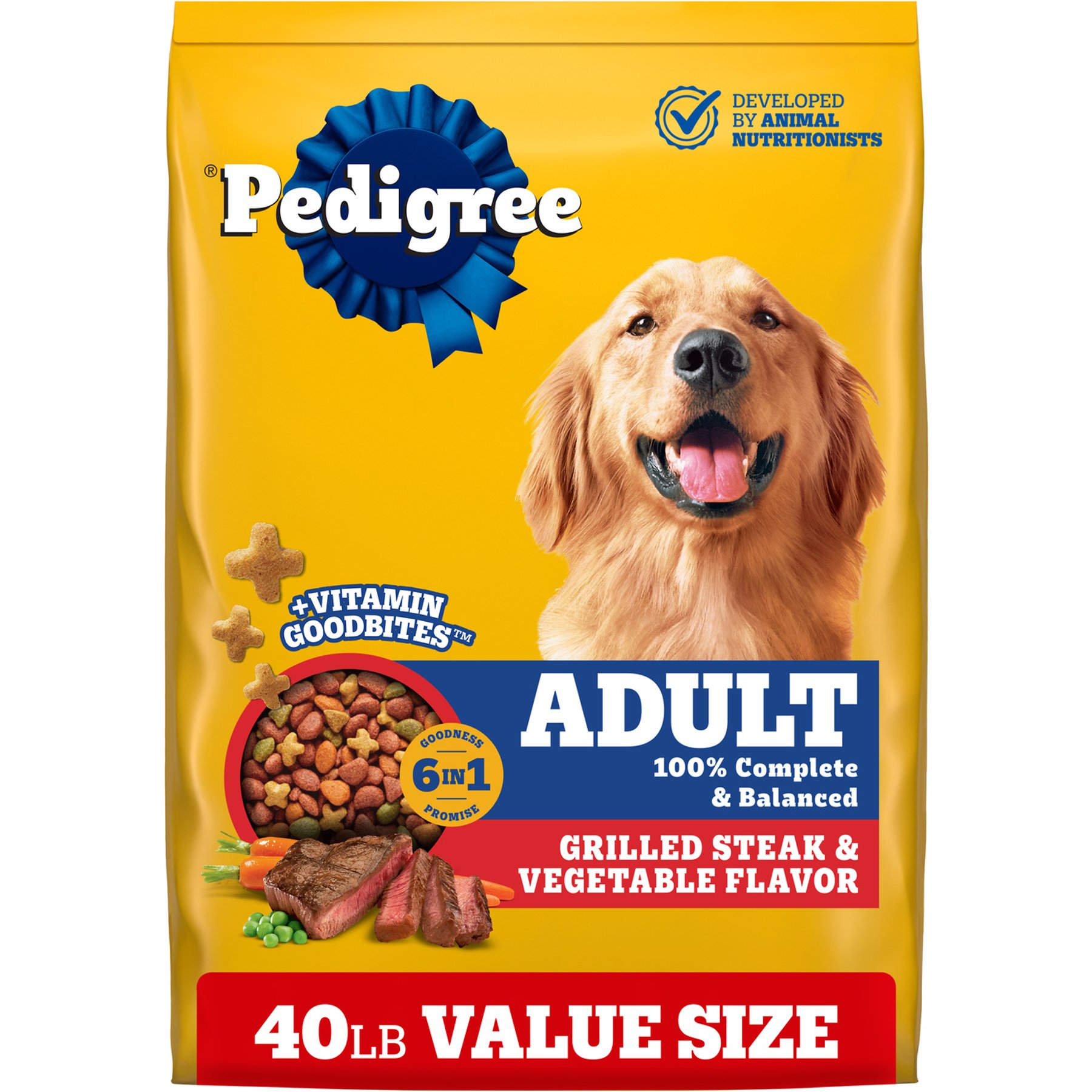
Pedigree Complete Nutrition Grilled Steak & Vegetable Flavor Dog Kibble Adult Dry Dog Food, 40-lb bag
Dogs bring out the good in us, and Pedigree dog food brings out the good in them. Show you...







Dogs bring out the good in us, and Pedigree dog food brings out the good in them. Show you...






A Corgi for sale belongs to a group of medium-small, low-set dogs that belong to the herding class. Known for their prowess with cattle, Corgis do not fare nearly as well with sheep. Their extreme speed and lowness to the ground allow them to deftly outmaneuver kicks from ornery cows. The Corgi's character has translated into a nimble, engaging, and fun companion. Corgis make excellent watchdogs, great partners for the active, and resilient playmates for kids and other dogs.
Corgi puppies for sale do not usually come with a care instruction manual, but the breed requires simple, straightforward attention compared to many others.
Like all dogs, Corgis require a high-quality diet consisting mostly of proteins and fats. While most of the amino acids should come from meat sources, many diets draw additional proteins from grains like corn and starches or legumes such as potatoes, peas, or yams. The ingestion of carbohydrates by pet dogs remains a hotly contested topic, but your goal should be to ensure meat features in the top few ingredients. Carbohydrates with possible antioxidant benefits include certain berries and greens. A Corgi requires about 30 to 34 calories per pound every day. Dividing your dog's food portion into two meals works most effectively. Working dogs need roughly twice the calories as average pets while sedentary and senior Corgis require much fewer calories. Puppies between three and seven months may need 50 to 70 calories per pound of bodyweight daily and should eat three or four times throughout a 24-hour period.
Basic grooming you should provide for your dog are regular coat and teeth brushing, clipping the nails, wiping the face of eye sleep, and cleaning and checking the ears. Corgis have double coats, and you should brush them twice a week. During heaving shedding of the undercoat in the spring and fall, you may need to increase brushing to every day for one to three weeks. You must accustom your Corgi to brushing her teeth soon after her arrival at your home or the task will become challenging if not impossible. Aim to brush your dog's teeth two or three times weekly. Check her ears every few days for redness, abnormal discharge, or a foul odor. Observe daily for any excessive scratching of the ears or head tilting. Finally, clip your pet's nails every four to six weeks. Some owners use a Dremel tool with good success, but you may have to increase your frequency of work on your dog's claws.
Despite its small size, the Corgi can be a handful to control. Full of energy, Corgis of both types are also independent thinkers with a stubborn streak. They do not respond well to force. You must start training with your puppy from a position of confidence and persistence. Your Pembroke is just outside the top 10 smartest dogs, and your Cardigan is in the top 35. Therefore, you need to somehow combine repetition and creativity to avoid boredom or wondering interests. The other challenge to training Corgis is their nippiness from a herding background. You need to employ constant guidance of acceptable behaviors for your Corgi, or he can become a menace to people and a danger to himself.
Corgis are naturally vivacious and alert. While you can create a sedentary Corgi, it is not advisable. Corgis are prone to obesity which is disastrous with their conformation. Also, lack of stimulation will likely lead to a destructive dog. An hour of daily exercise is ideal for your Corgi. About 20% to 35% of the activities should be strenuous and another 15% to 20% dedicated to training and socialization. Even adult dogs require ongoing training as it keeps them well-behaved and provides mental enrichment.
Corgis are lively dogs that can do well in an apartment if they get plenty of exercise and you do not leave them by themselves for extended periods. They are small enough not to take up too much space. An advantage of a Pembroke in a condo or apartment is that she usually has no tail. Any Corgi will do better, however, with a large backyard.
Corgis were once recognized as two types of the same breed. As of 1935, the Pembroke Welsh Corgi and the Cardigan Welsh Corgi have been considered as two separate breeds.
The Pembroke Welsh Corgi is a medium-small dog with dwarfed legs that puts her low to the ground. Neither fine- nor heavy-boned, the Corgi is a hard worker and an active companion that should strike you with its intelligence and boldness. These Corgis have a wedge-shaped head betraying their Spitz ancestors. Many are born with a bobtail or have it docked at a few days old. Otherwise, a few may have the full curly tail, another Spitz trait. A Pembroke should be about 40% longer than she is tall. Her skull is flat between the ears and her stop moderate. The head should also appear chiseled with a tapering muzzle and resembling the appearance of a fox. A Pembroke Corgi's eyes are oval-shaped and brown. The ears are upright and medium-sized with rounded tips. Corgis have a surprisingly long neck that should appear powerful and in balance with the rest of the body. The topline is level, the chest is deep, and the limbs are replete with hard muscles.
Cardigan Welsh Corgis are slightly larger and longer than Pembrokes. They have larger ears that are a little less rounded at the tips. The head is not foxlike but is somewhat refined and chiseled with a tapering muzzle. Otherwise, several similarities are apparent like the strong arched neck, deep chest, and level topline. The tail is low-set but full, unlike the Pembroke. A Cardigan's tail should reach at least to the hocks, and the dog carries it straight out when running as opposed to curled over the back. Other differences the Cardigan shows from the Pembroke are bowed front legs, less of a ruff around the neck, less chiseling in the head, a shorter muzzle relative to the skull, and heavier bone substance.
American Corgi
American Corgies have recently become more and more popular. It is not a recognized breed, but a mix. American Corgies are the result of crossing a Cardigan Welsh Corgi with a Pembroke Welsh Corgi.
Color patterns are also strikingly different between the two breeds of Corgi puppies for sale. If you see a solid black Corgi or a blue merle Corgi, you can be 99% sure it will be a Cardigan Welsh Corgi. A blue merle Corgi shows a marbling pattern between white and black hairs in her coat. She may have blue eyes or one blue and one brown eye. A tri color Corgi is either a tan-pointed or brindle-pointed dog with white markings. Any brindle Corgi or a Corgi with brindle points is going to be a Cardigan. A black and tan Corgi with white markings can be either a Pembroke or a Cardigan Welsh Corgi. Tricolors and other commonly shared shades will require you to look at other parts of the dog to determine which breed it is.
Choosing a Corgi for sale involves the consideration not only of physical and temperamental attributes but also whether you will be able to cope with the potential health problems. Puppies should come from parents where the breeder screened their eyes and hips. Other recommended tests on both breeds are a genetic screen for degenerative myelopathy and progressive retinal atrophy. For adult rehoming and rescue and shelter dogs, you may not have the luxury of either an in-depth history, family tree, or health tests. If possible, you should visit any puppies you are considering. Make sure your prospective pup looks well-cared-for and does not have signs of eye or nose discharge, vomiting, or diarrhea. The Corgi is not a shy breed, so do not pick the puppy cowering and trembling in a corner.
Often, you can visit advertised Corgi puppies for sale near me and determine a little bit about their personalities. Experienced breeders frequently attempt to match a puppy's personality type to your lifestyle. Corgis have several consistent themes in their dispositions.
Choosing between a Pembroke and a Cardigan Welsh Corgi for sale may seem difficult, but it comes down to a preference in looks and subtle personality differences. Pembroke Corgis tend to be more outgoing and trainable and, of course, have foxlike features and expressions. Cardigan Corgis have a tail and are slightly larger with
Sponsored picks
Affiliate disclosure: purchases made through these links may earn PetClassifieds a commission.

Grain-Free • Novel Protein • Gut-First Nutrition Give your dog a meal built for wellness w...

Grain-Free • High-Protein • Advanced Digestive Support Brothers Turkey Meal & Egg recipe i...
Dogs bring out the good in us, and Pedigree dog food brings out the good in them. Show you...


