

Arm & Hammer Litter Slide Multi-Cat Scented Clumping Clay Cat Litter, 76-lb bundle
It’s time to end scraping and scrubbing with Arm & Hammer Slide Easy Clean-Up Multi-Cat Cl...

It’s time to end scraping and scrubbing with Arm & Hammer Slide Easy Clean-Up Multi-Cat Cl...

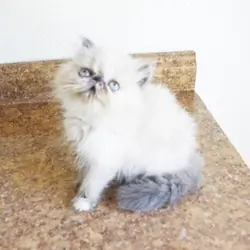
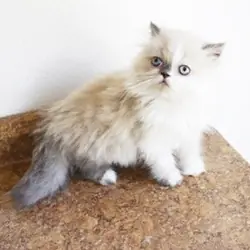
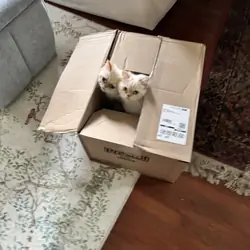
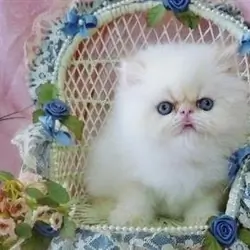
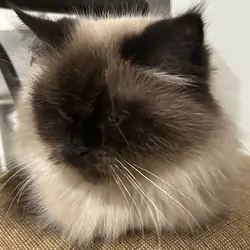
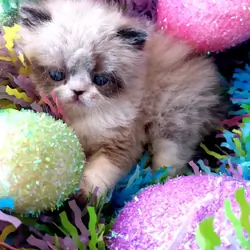
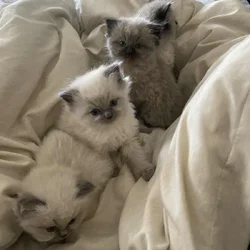
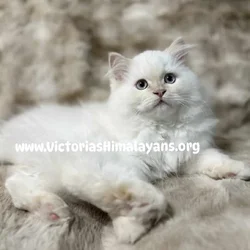
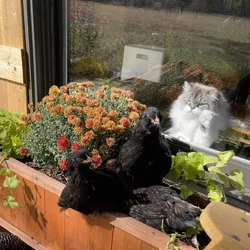
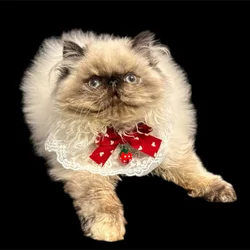
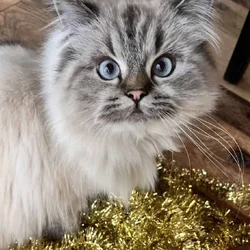


A Himalayan, or Himmie, has impressed fanciers and owners alike for decades with its striking beauty and placid personality. Possessing the markings of a Siamese but the long fur and the laidback disposition of the Persian, Himalayan cats for sale are ideal for small quiet families with older children and an additional pet feline. Himmies require moderate attention and extensive grooming.
A Himalayan is a medium-sized long-haired cat that ranges from 10 to 12 inches tall and weighs seven to twelve pounds.
If the Himalayan was a dog, it would be a designer breed. Founders wanted the round compact form of the Persian with the pointed marking of Siamese cats. Efforts began in earnest to create such a cat in the 1930s. By 1948, there were three independent efforts in the US to create a color-pointed long-haired cat. One of them was Jean Miller, known for her work in the establishment of the Bengal cat. Another was Mrs. Goforth who would ultimately name the breed and receive credit for its entry into the Cat Fancier's Association in 1957. Meanwhile, the development of the Persian-Siamese hybrid began independently in Britain. The Governing Council of the Cat Fancy (British major registry) recognized the Longhaired Colourpoint cat in 1955. In their early days, the Himalayans were a more even blend of Siamese and Persian traits than they are now. In the 1960s, many cats shifted to favor the Siamese heavily in appearance as backcrosses to purebred Siamese cats increased. In the 1980s, fanciers cemented a breed standard that rejected Himalayan cats that did not have a Persian form. This also excluded Himmies that had inherited the longer muzzles of the Siamese cat. Modern Himalayan cats can be classified in four different ways depending on the regional registry.
A Himalayan cat should have a Persian conformation.
Not only should a Himalayan look like a Persian cat, but it should act like one. Himalayans have low to moderate activity levels and have a quiet voice that they use infrequently. They are loving and docile, enjoying lap time yet able to spend brief periods alone. Although Himmies are not exceptionally energetic, they are playful at times. They are engaged and always interested in your activities. Himmies are friendly even to strangers. Their approachability makes them at moderate risk for theft. Well-socialized Himalayans live peacefully with other cats and cat-friendly dogs. They are also tolerant of children who have learned how to be kind, gentle, and quiet around cats.
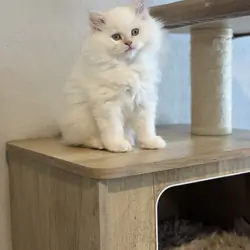
A Himalayan has a long, dense, dual coat of fine fur. This fineness makes the cat exceedingly soft and contributes to its curved lines and round appearance. Himalayans look much larger than they are because their hair stands off from the body. They have a luxurious ruff around the neck that should extend between the front legs. Himmies have a brush tail and toe tufts.
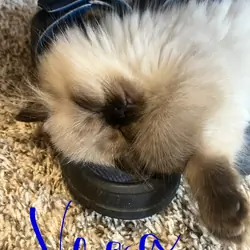
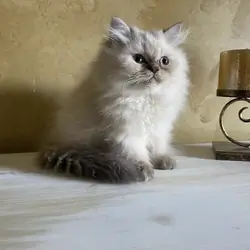
Himalayans have points, meaning they have a white, fawn, or cream background with markings limited to the face, ears, paws, lower legs, and tail. The colors on the face resemble a mask and ideally include an area just above the eyes that extends to and encompasses the chin. Colored markings also wing out from the outer corners of the eyes. A cat's points should contrast markedly with its base color, although it is normal for the coat on the body to darken with age. Cat shows usually allow for aging changes and subtle shading through the coat. A Himalayan's eyes should be blue, and its colors are named after its points.
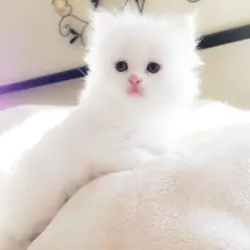
Himalayan kittens for sale, like their Siamese counterparts, are born solid white or cream. Their points just barely appear as faint marking at one or two weeks of age. Cats often do not fully develop their points until they are 18 to 24 months old. For example, a four-month-old seal point Himalayan kitten for sale may have most of its facial mask missing with only a dark patch around the nose or on the ears.
A Himmie that you are considering for purchase through a breeder should have the following:
Himalayan kittens for sale should not leave the breeder before they are twelve weeks old. The longer a kitten can stay with its littermates, the more well-adjusted it will be when you acquire it.
Himalayans have the same basic care as Persian cats.
A Himmie needs daily brushing to prevent its fur from becoming matted. It is common for owners to give their Himalayans lion cuts, keeping the body short with a frill of longer hair around the neck and a tuft on the end of the tail. This cut, of course, is not allowed for show cats which require multiple brushing a day and several baths a month. Pets need bathing every week or two to keep the long fur manageable. Himmies, like Persians, have difficulty grooming their fur effectively. Your cat must undergo other grooming rituals as well.
According to their weight and activity level, most Himalayans need 1/2 to 3/4 a cup of food daily. Raw and homemade diets may work out if given by weight. In such cases, a Himalayan needs 2.5 to 5.75 ounces of food every day. If you are not experienced with home-cooked diets for carnivorous pets, consult a veterinarian to make sure your recipes are complete and balanced. It is wise to get expert advice even about commercial raw and dehydrated cat food.
Cats need exercise like dogs but their biomechanics are a lot different. Dogs evolved from the same ancestors as wolves and benefit from long and sustained exertion. Cats, on the other hand, are built to run for very short periods. These short explosions consume inordinate amounts of energy, accounting for the feline's large requirements for sleep. Your Himalayan is likewise only going to be able to sustain short bursts of activity at a time. As your cat matures and gets older, you may have to encourage it to be active with lures, oversized feathers, and balls. Your cat will benefit from two or three play sessions a day. Himmies are not proficient jumpers, so you do not have to worry about creating high areas for them.
Himalayans are smart like all cats, running in the mid-range for intelligence among the different breeds. They are people-oriented which makes them highly trainable. If you can make it interesting for your cat or motivate your pet with food, you can train tricks and basic commands.
A Himalayan cat typically lives nine to twelve years with some individuals reaching 15 years old.
Sponsored picks
Affiliate disclosure: purchases made through these links may earn PetClassifieds a commission.
It’s time to end scraping and scrubbing with Arm & Hammer Slide Easy Clean-Up Multi-Cat Cl...

Your cat deserves a high-quality, gourmet entree at every mealtime, so serve them Purina F...


