

Small Parrot Cage, Black
When it’s time to give your feathered friend a new place to roost, Prevue Pet Products Sma...
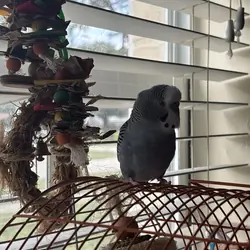
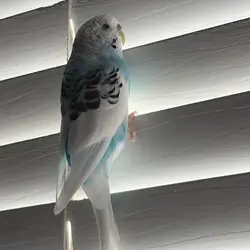
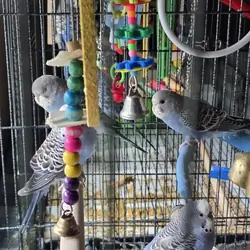
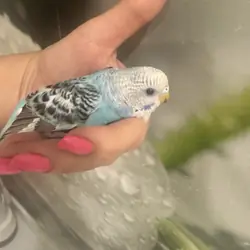
When it’s time to give your feathered friend a new place to roost, Prevue Pet Products Sma...
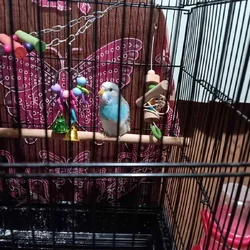


A parakeet for sale is a vivacious member of the parrot family, frequently sought out because it is often a great talker, comes in vivid beautiful colors, and is more manageable than larger birds. Parakeets, or budgerigars, require a considerable time commitment from their owners to be happy and to reach their full potential as companion birds. Parakeets can make great pets for dedicated children as well as adults who have time to engage with and train a bird daily.
Parakeets are small-sized parrots with a tapered body and long, sometimes flashy, tail feathers. They also have hookbills, so named because the upper part of the beak curves like a hook. Finally, a parakeet has X-shaped feet, meaning two toes point forward, and the other two point backward as the bird perches. Parakeets, budgerigars, and budgies all refer to the same grouping of parrots. Budgies bond better with their owners if they are handfed. Parakeets often go through a bluffing phase or period of aggression that lasts a few weeks to a year or more depending on the bird and the species. Daily interaction is crucial. Healthy birds should have shiny feathers and bright alert eyes.
Although parakeets originated thousands of years ago, a zoologist first described them in written reports around 1805. The little parrots are native to Australia and started moving to Europe as pets in the 1840s. Captive breeding of parakeets or budgerigars began around the 1850s and experiments with different colors took off about 20 years later. As with other pet birds, parakeets exploded in popularity in the 1900s and expanded into the United States. The demand for parakeets has persisted over the years.
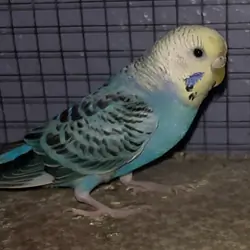
Wild parakeets typically have colors based around green and gold. The other major color group for parakeets propagated in pet birds is blue and white. Parakeets are often classified by color patterns rather than breeds. Genes that affect the shades of parakeet colors are dark factors.
Light green is a dominant color in parakeets, and blue represents a naturally occurring gene that suppresses any yellow coloration. Other color variants, including dark and olive green parakeets, involve selective manipulations by breeders. Some of the colors that you might see in pet parakeets for sale follow:
Parakeet species number in the hundreds with over a hundred color variations. A comprehensive discussion of all types is impossible. However, you can get a good handle on the more common types of parakeets.
Although sometimes called rainbow parakeets, the correct name is rainbow lorikeet, and they belong to a different family of parrots. People will often list rainbow lorikeets under parakeets for sale because of their pleasant personalities and striking multi-colored feathers.
While many people site parakeets as being easy to care for because of their size, depriving them of anything you would provide a larger parrot is unjust and not supported. Budgies have the same social needs and requirements for exercise and mental stimulation that a cockatoo or Amazon parrot does. They simply require less space and are easier to handle.
A parakeet for sale may come with a cage. It is your job to make sure the cage is big enough for your bird and safe. While you want more than one perch, too many perches can clutter the cage and make it unsafe for parakeets that readily fly. Wooden perches are best for developing the strength of your parakeet's feet. The minimal dimensions of a parakeet's cage should be 12 inches long x 18 inches wide x 18 inches tall. This is designed for budgerigars that do not spend much time in the cage outside of sleeping. A more ideal starting point for caged parakeets is 18 inches long x 20 inches wide x 18 inches tall. If you decide to get two parakeets, you will need to more than double the size to account for additional perches, food and water dishes, and toys.
Toys will go a long way toward providing mental enrichment for your parakeet. Make sure to get toys appropriate for your parakeet and not designed for a larger parrot. Just as for any pet, inspect and avoid sharp edges, choking or foreign body hazards, and toxic coatings. An additional precaution to take with pet bird toys is to check for any potential for entrapment. Wood toys make excellent choices for chewing. Do not use painted toys, but acrylic or plastic items with bright colors are easy to clean. Budgies like to swing and climb, so get ladders, ropes, ready-made swings, and bells. Finally, you can get foraging toys to serve as puzzles. Stimulate your bird to explore things by offering different textures and shapes.
Parakeets should get a minimum of two hours of daily exercise outside of their cage. Ideally, exercise and your interaction with your bird should total three to six hours every day. Playing interactive games and holding your bird on your hand or shoulder will satisfy some of its social needs and mentally engage it. You can also train your bird to talk and dance.
Parakeets require a nutritionally balanced base diet. There are several options available in the form of Nutri-berries, cakes, or pellets. Budgies can have about three-quarters of their diet comprised of seeds. One of the most important factors in your parakeet's diet is that it be varied as well as balanced. In the wild, parakeets eat from a huge range of foods available and need that same stimulation in captivity. You should supplement your bird's base with fruits and vegetables such as oranges, berries, bananas, asparagus, broccoli, and green beans.
Sponsored picks
Affiliate disclosure: purchases made through these links may earn PetClassifieds a commission.
When it’s time to give your feathered friend a new place to roost, Prevue Pet Products Sma...


