
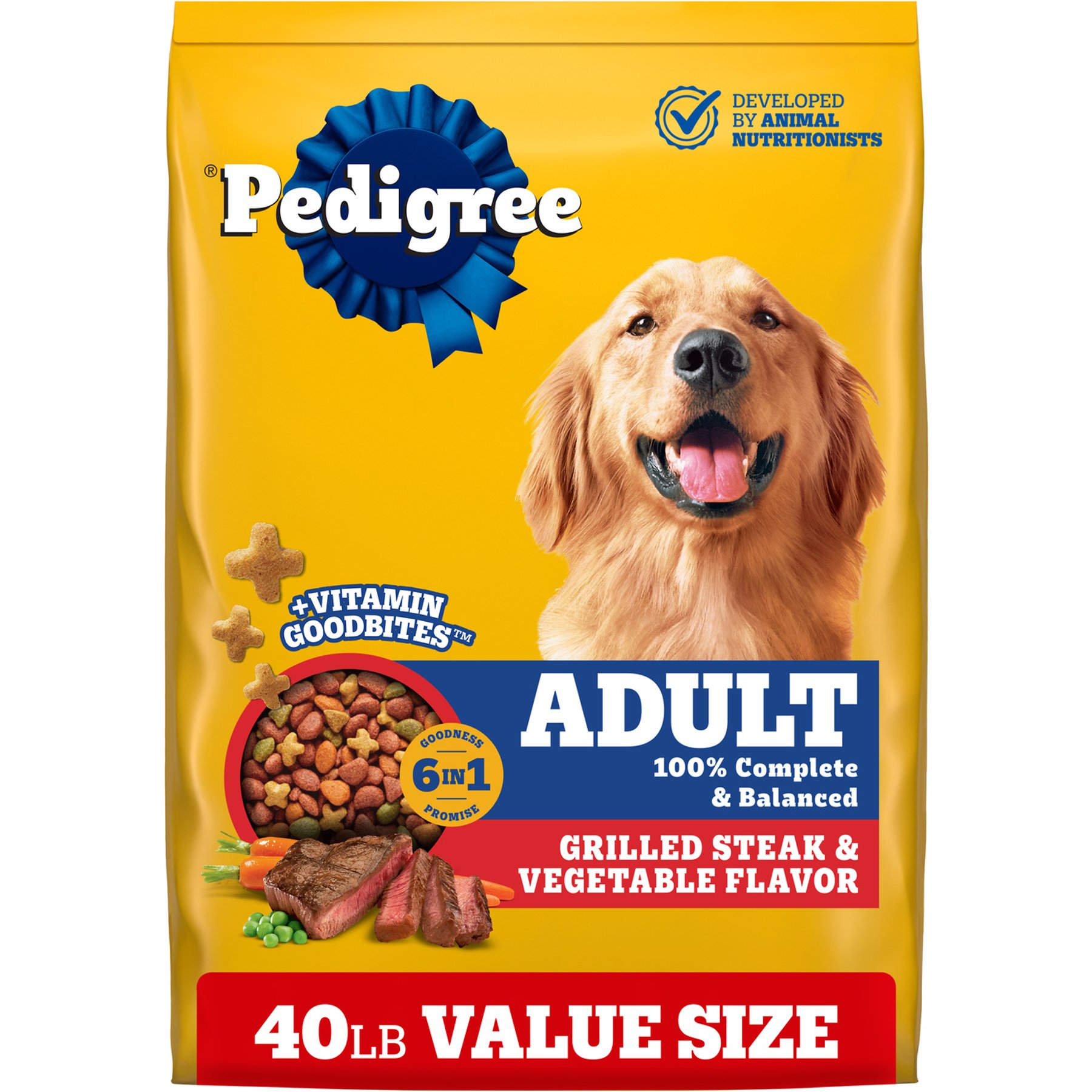
Pedigree Complete Nutrition Grilled Steak & Vegetable Flavor Dog Kibble Adult Dry Dog Food, 40-lb bag
Dogs bring out the good in us, and Pedigree dog food brings out the good in them. Show you...



Dogs bring out the good in us, and Pedigree dog food brings out the good in them. Show you...





Popular Filter:
Goldendoodle Puppies for sale under $500
Goldendoodle Puppies under $1000
Goldendoodle puppies for sale do not lose much of their charm when they become adults. They remain one of the most sought-after designer dogs because of their hair, intelligence, and friendliness. Moreover, they can adapt to large families or sedentary couples because of a flexible activity level.
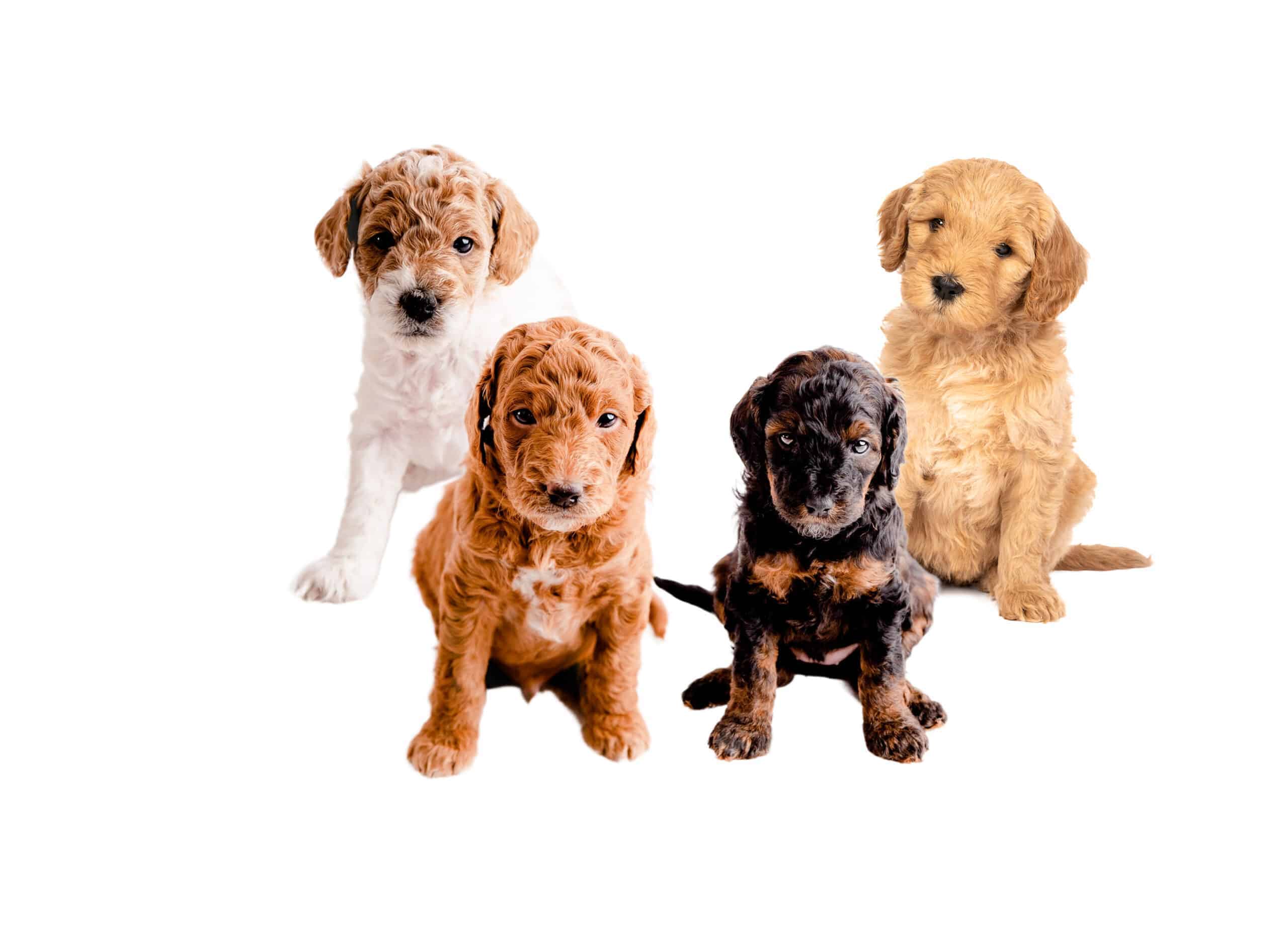
A Goldendoodle is a medium to a large-breed dog that is a cross between a Golden Retriever and a Poodle. Its weight and height are most influenced by which of the three size varieties of Poodles a breeder uses.
Goldendoodles were created in 1969 by Monica Dickens. However, they did not take off as a breed concept until Wally Conron’s Labradoodle Labrador Retriever x Standard Poodle) of 1989. The goal of the Labradoodle was to supply the demand for a larger hypoallergenic guide dog for the blind than the Cockapoo. Goldendoodles naturally fell into that niche as well. Goldendoodles started making strides in the US as a pet by the 1990s. Despite originally supplying a large-dog niche, modern Goldendoodles come in three sizes.
Most Goldendoodles, especially first-generation or F1 crosses, will look like a mix between both parent breeds. A Goldendoodle's signature look is a broad skull with a moderate dome shape to the crown. The eyes are mildly oblique and oval and are dark. The ears are medium-set and very flat against the head. They can be medium in size and triangular like a Golden or a little longer like a Poodle. You will readily recognize the Goldendoodle's long muzzle which is sufficiently strong not to look snipey. Goldendoodles are compact, almost square-like, in the body with a rather wide and deep chest and moderate abdominal tuck-up from the end of the ribcage to the hips. The tail is long and tends to curl upwards, although not usually over the back.
A Goldendoodle's coat is variable. It can be the fine and wavy fur of the Golden Retriever with feathers on the belly, ears, chest, legs, and tail, or the tight curls of the Poodle. Generational crossbreeding makes the coat more consistent with the most sought-after quality being loose curls or waves. The ideal coat is low-shedding and hypoallergenic.
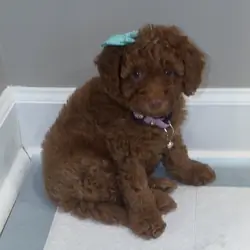
Goldendoodles are most often deep golden, one of the possibilities of the Golden Retriever. They can also be chocolate, white, brown, apricot, black, or particolored. Particolored dogs are any two solid colors with an even distribution including a solid color with white or black and tan.
A Goldendoodle should be a friendly and happy dog with a tail that constantly wags. Most of them have a Golden Retriever smile and readily accept affection from anyone. Poorly socialized Doodles can be shy and fearful or dog aggressive. Other Goldendoodle temperamental traits include the following.
A Goldendoodle's appearance remains consistent with Golden Retriever traits showing up in the head. This occurs despite the large percentage of Poodle blood in many Goldendoodle puppies for sale. Most Goldendoodles in the US are f1b dogs, meaning a first-generation cross was back bred most frequently to a Poodle. Australia tends to focus more on multigenerational dogs (three generations or more of Goldendoodle x Goldendoodle breeding). Although some breeders seek to propagate certain characteristics like disposition, much of the goal in crossbreeding Goldendoodles is to improve the coat's quality.
You can import a Goldendoodle or find one locally. Occasionally you will locate Goldendoodles at humane societies or through Golden retriever or Poodle rescue organizations. If you find a litter of "Goldendoodle puppies near me," see if you can visit the seller. Ideally, you want to see the mother, father, or both. Be cautious of breeders who refuse to allow you to see the mother even though she might be on site. Puppies can inherit much of their temperament from the amount of time they spend with their dams. Some sellers will do breed-specific tests on the parents, but you can also see how they care for the dogs on the premises. Carefully check out the cleanliness of the site and the attitude of the pups. Any puppy you select should be clean and dry as well as active and outgoing.
The curlier your dog's hair is, the more often you will need to brush it to prevent severe tangling. Even Goldendoodles with Golden Retriever fur may have extensive feathering that requires your attention. They can become matted around the ears, legs, chest, and tail. Many Goldendoodle owners keep their dogs in a short Teddy bear or puppy clip. Such dogs have a uniform coat length of about half an inch or slightly longer. Many Goldendoodles have a beard and mustache for which you will need a short-bristled brush.
Goldendoodles enjoy the good health of numerous other crossbred dogs and can live 11 to 16 years.
Mini Goldendoodles are 15 to 20 inches tall and only weigh 15 to 35 pounds. Miniature Goldendoodles are obtained by crossing Goldens with Toy Poodles. A breeder may also choose a Golden Retriever that is smaller than usual.
Goldendoodles require a protein-based diet along with fats. You can provide carbohydrates based on which diet plan you decide to use, but they are not essential for most dogs. Vegetables and fruits can supply beneficial antioxidants, and some dogs maintain their weight more easily if they eat potatoes or grains. A 30 to 50-pound dog needs about 900 to 1500 calories a day which is roughly equivalent to 2.5 to 3.5 cups of kibble or 0.6 to 1.5 pounds of raw homemade food. Your dog's caloric intake depends on age, weight, and activity levels. Puppies and pregnant or lactating females require two to three times the calories of an average adult. Extremely active or working dogs also need a significant increase in the food they eat.
Goldendoodles, although content to spend the entire day on the couch beside you, should get 60 to 90 minutes or more of exercise daily. You can substitute much of the exercises for your immature puppy with training and socialization. Adult Goldendoodles require mental stimulation as well as rigorous activities. They benefit from bonding or competitive endeavors such as agility, performance, therapy, and obedience.
Both Poodles and Golden Retrievers are not only extremely smart but also willing to please their owners. The Goldendoodle's intelligence and personality make it quite trainable. However, Goldendoodles are also sensitive and thus need a calm, persistent, and gentle approach. They respond well to praise and rewards in the form of food treats, verbal praise, or extra attention and playtime. Change up your techniques to avoid a lack of attention due to boredom.
Sponsored picks
Affiliate disclosure: purchases made through these links may earn PetClassifieds a commission.

Grain-Free • Novel Protein • Gut-First Nutrition Give your dog a meal built for wellness w...

Grain-Free • High-Protein • Advanced Digestive Support Brothers Turkey Meal & Egg recipe i...
Dogs bring out the good in us, and Pedigree dog food brings out the good in them. Show you...


